Five Income Streams That Don't Care If You Cancel Last Minute
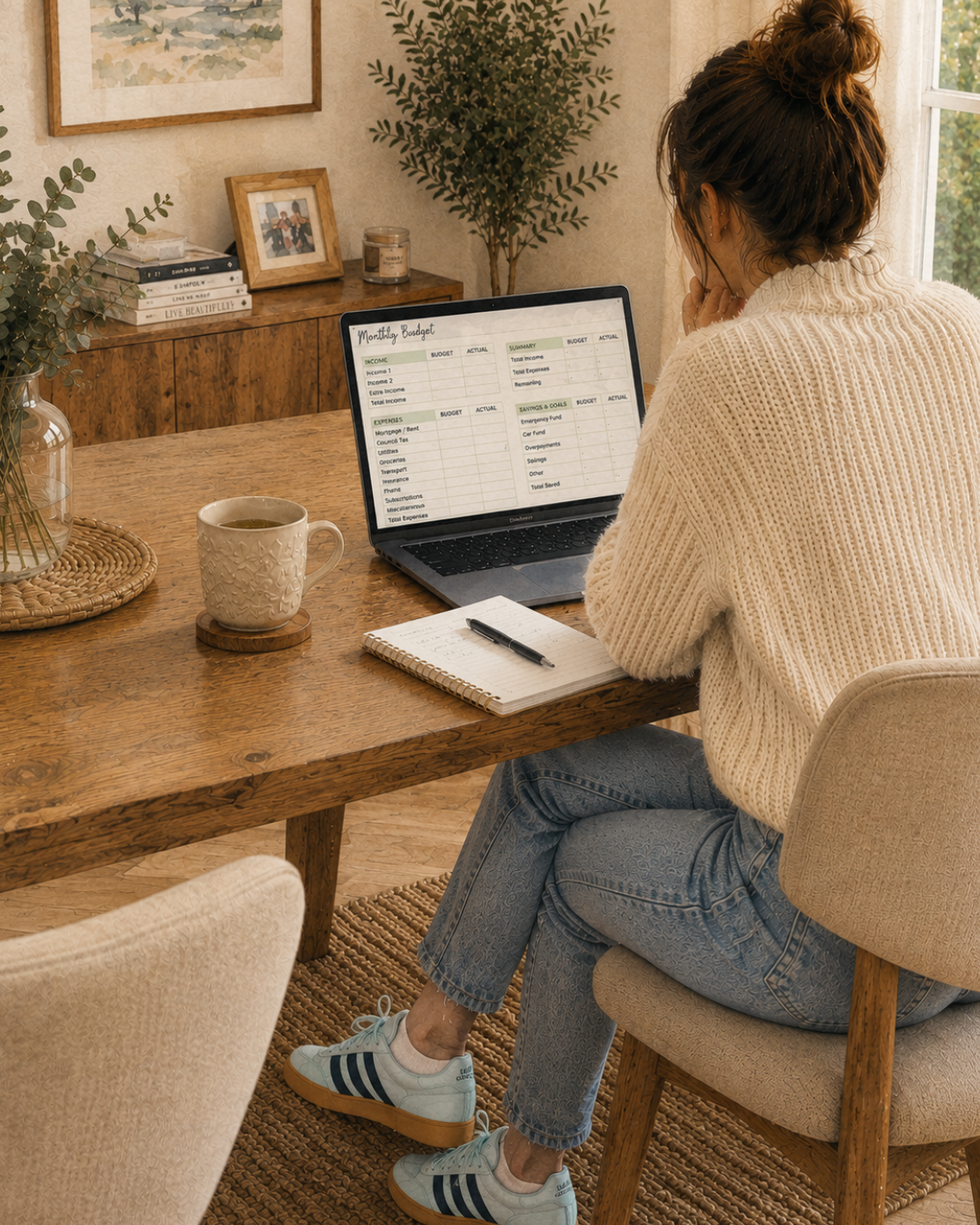
Let's talk about the kind of income that doesn't require an explanation.
Not "I'm so sorry, I have a flare-up." Not "I need to rearrange, my mum's had a fall." Not "I can't take that shift, I'm not in a good place this week." Just income that exists, without judgment, whether you showed up today or not.
That's not a fantasy. It's a design choice. And it starts with being deliberate about the kind of income you build toward.
This isn't about replacing your salary overnight. It's about adding layers, slowly, in whatever time and energy you actually have, so that a cancelled day doesn't mean a financial crisis. Here are five income streams that work especially well when life is unpredictable, what they realistically earn, what the tax picture looks like in the UK, and the smallest possible first step for each one.
1. Digital Products - Build It Once, Sell It On Repeat
A digital product is anything someone can buy and download without you being involved in the transaction at all. Templates, guides, workbooks, spreadsheets, e-books, planners, printable trackers. If you've solved a problem in your own life, someone else has the same problem and would rather pay a few pounds for your solution than spend hours figuring it out themselves.
The realistic earning potential: a single well-targeted digital product on Etsy or Gumroad can earn anywhere from £20 to several hundred pounds a month, depending on the niche and how well it's described. It won't happen overnight. But unlike a shift or a client project, it can earn while you're asleep, in a waiting room, or having a genuinely awful Tuesday.
Where to sell: Etsy is the most established marketplace and has built-in search traffic. Gumroad and Payhip are simpler to set up and take a smaller cut. Start with one platform. Add others once you know the product sells.
The UK tax picture: HMRC gives everyone a £1,000 trading allowance per tax year. Earn under £1,000 from digital product sales and you don't need to register for Self Assessment or pay any tax on it at all. Go over £1,000 and you'll need to register as self-employed, but you'll only pay tax on profits above your personal allowance, which sits at £12,570 for 2026/27. Keep a basic record of income from day one, a simple spreadsheet is fine, so you're never scrambling if HMRC asks.
Your first step: write down one problem you've had to solve that others in your situation probably face too. That's your first product idea.
2. Content Creation - Your Experience Is the Content
Before you close this down with "I'm not an influencer," hear me out.
Content creation in 2026 doesn't require a ring light, a carefully curated aesthetic, or the energy to be on camera every day. A blog, a newsletter, or a consistent presence on one platform can generate income through affiliate links, brand partnerships, or by building an audience that eventually buys something you make or recommend.
The realistic earning potential: content income builds slowly and then compounds. Affiliate income from a single well-placed link in a blog post can earn for years. A newsletter with a few hundred engaged subscribers is attractive to small brands in your niche. A modest but loyal audience that trusts you is worth considerably more than a large one that doesn't.
The specific advantage for this audience: lived experience is genuinely valuable content. The reality of managing finances with a chronic illness, the hidden costs of being a carer, the financial rebuild after a toxic workplace exit. These are stories people are actively searching for and not finding enough honest versions of. You don't need to reach millions. You need to reach the right people.
Where to start: Substack for newsletters, with no technical setup and a free tier. A simple WordPress or Squarespace blog if you prefer writing. TikTok or Instagram Reels if short video feels more natural than writing. Pick one format you can realistically produce on a bad day and stick to it.
The UK tax picture: income from affiliate links, paid partnerships, and ad revenue all falls under the trading allowance rules. Under £1,000 a year, HMRC doesn't need to know. Over that, register, declare it, and pay tax only on profits above your personal allowance. If a brand pays you in products rather than cash, that can still count as taxable income, so keep a note of anything you receive.
Your first step: pick one platform and write or record one piece of content this week. Don't wait until it's perfect. The algorithm, and the audience, rewards consistency over polish.
3. Freelance Services With Async-Friendly Clients
Freelancing gets a bad reputation for being feast-or-famine and relentlessly deadline-driven. That can be true. It can also be entirely untrue, depending on who you work with and how you structure things.
The key word is async. Work that doesn't require you to be live, available, and performing at a specific time. Copywriting, proofreading, bookkeeping, virtual assistance, social media scheduling, research, transcription, data entry, website updates. These are skills that can be delivered on your timeline, scoped around your capacity, and renegotiated when a bad week arrives, provided you've set expectations clearly from the start.
The realistic earning potential: UK freelance rates vary widely by skill, but even at the lower end, bookkeeping or VA work at £15 to £25 an hour for ten hours a month is £150 to £250 in additional income. Copywriting and specialist skills command considerably more. The goal early on isn't to maximise rate. It's to find two or three reliable clients who value how you work, then build from there.
Where to find clients: Upwork and PeoplePerHour for general freelance work. Bark.com for local service-based work. LinkedIn for professional services. Being direct and honest in your profile about how you work, deliverable-based, async, no last-minute calls, will filter out the wrong clients before they waste your time.
The UK tax picture: as a self-employed freelancer you'll pay income tax on profits above your £12,570 personal allowance, plus Class 4 National Insurance on profits above the same threshold. The admin sounds more frightening than it is. HMRC's free Making Tax Digital resources are a good starting point. If you want a paid tool, FreeAgent costs around £19 a month and connects directly to HMRC. QuickBooks starts at around £10 a month. Both are worth it once you have more than one or two clients, mostly for the peace of mind.
Your first step: write a short, honest paragraph describing what you can offer, how you work, and what kind of clients suit you. That's the foundation of every profile and pitch you'll ever write.
4. Renting Out What You Already Have
This one gets overlooked because it feels too simple. But if you own something people want to use, you can earn money from it without doing very much at all, and in some cases with almost no ongoing effort once it's set up.
The realistic earning potential: a parking space in a city or near a train station can earn £50 to £200 a month through JustPark or YourParkingSpace, depending on location. A spare room through SpareRoom or Airbnb can earn significantly more, though that involves more management. A car you don't use daily via Turo or HiyaCar can earn £200 to £500 a month. Specialist equipment such as cameras, tools, or camping gear through Fat Llama can earn £30 to £100 per rental. Loft or garage storage through Stashbee is low maintenance and earns £50 to £150 a month depending on space.
None of these will make you rich. But two or three of them running together, with minimal ongoing effort, starts to look like a meaningful monthly figure.
Practical things to sort first: check your home insurance policy before listing a room or parking space, as some policies require notification. For car sharing, platforms like Turo include their own insurance during trips, but check the excess. Fat Llama includes insurance on listed items up to a certain value. If in doubt, call your insurer and ask directly.
The UK tax picture: HMRC offers a separate £1,000 property allowance per tax year, on top of the trading allowance. Earn under £1,000 from renting out a parking space, storage, or equipment and it doesn't need to be declared at all. Rent a room in your home and the Rent a Room Scheme lets you earn up to £7,500 a year completely tax-free. Earn over that and you'll pay tax on the excess, but the first £7,500 is entirely sheltered.
Your first step: look around your home and make a list of what you own that sits unused most of the time. Then check whether any of the platforms above cover it.
5. A Micro-Investment Habit - The One That Builds While You Rest
This one is different from the others. It won't generate income this month. But it belongs on this list because starting it, even with very small amounts, is one of the highest-value financial decisions you can make right now. And in the UK, the wrapper for doing it is genuinely one of the most generous tax advantages available to ordinary people.
A Stocks and Shares ISA lets you invest up to £20,000 per tax year and pay zero UK income tax or capital gains tax on anything it earns. Dividends, growth, interest. None of it is taxable, and none of it needs to be declared. The ISA allowance for 2026/27 remains at £20,000 total across all ISA types.
One thing worth knowing right now: from April 2027, the Cash ISA allowance will drop from £20,000 to £12,000 for the under-65s, while the Stocks and Shares ISA allowance stays at £20,000. The current tax year is the last full year under the old rules. If you've been using a Cash ISA for everything, it's worth thinking about whether some of that allowance should move into a Stocks and Shares ISA before the rules change.
You don't need £20,000. Platforms like Vanguard, Moneybox, and Freetrade let you start from £1 a month. You're not picking individual stocks. You're buying small slices of diversified funds that hold hundreds of companies across multiple countries. The risk is real, the value can fall as well as rise, but over long periods the historical trend is upward, and the tax shelter means every penny of growth stays yours.
The point isn't the amount. It's the habit. Twenty pounds a month invested consistently from your mid-thirties will, over twenty years, become something meaningfully larger than the same money sitting in a current account. Compound growth is genuinely difficult to explain in a way that feels real until you see it working. But it works.
If you have high-interest debt, pay that down first. It's the same maths in reverse and the interest rate on debt is almost always higher than investment returns. But once that's managed, even the smallest regular investment is doing something useful in the background, every single day, regardless of what kind of day you're having.
Your first step: open a Stocks and Shares ISA with one of the platforms above. Fund it with whatever you can, even £10. The account existing is the hardest part.
The Thread Running Through All of This
None of these require you to be available, responsive, and fully functional every single day. That's not an accident. It's the whole point.
The standard model of earning, show up, perform, get paid, is built for people whose bodies and lives are consistent and predictable. When that's not your reality, the model needs to change. Not you.
You don't need to do all five. You don't need to start this week. But if you did pick one and took the smallest possible first step, one product idea written down, one platform signed up to, one ISA opened, you'd be further along than the version of you that kept waiting until everything felt more stable.
It doesn't get more stable first. You build the stability. This is how.
Nothing in this post is financial advice. It's a starting point, not a prescription. Tax rules and allowances can change, and individual circumstances vary. For anything tax-related, HMRC's guidance at gov.uk is free and worth reading. If your situation is complex, a session with an accountant or independent financial adviser is money well spent.
